
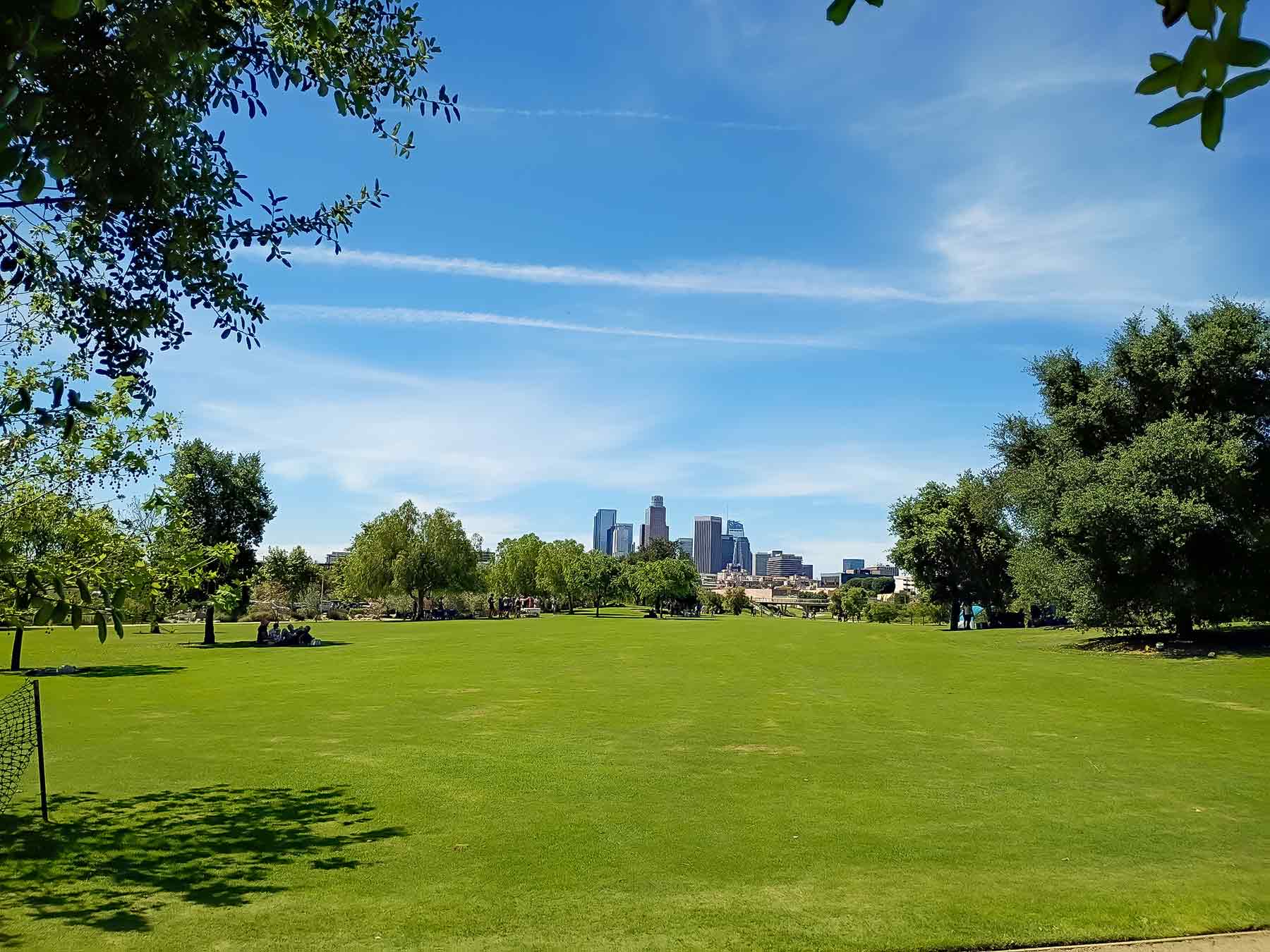
In the heart of Los Angeles, just a short walk from Chinatown and the downtown high rises, Los Angeles State Historic Park is a living story of movement, change and community. What we see today as a vibrant urban green space has been shaped over generations by people who cared for this land — from Indigenous stewardship and early agriculture to railroads, industry and passionate community advocacy.
During National Preservation Month, Los Angeles State Historic Park reminds us that caring for California’s historic places is so much more than protecting land or buildings. It’s about honoring the stories, cultures and community connections that make California unique. When we care for these special places together, we are reminded that they are forever shaped by people, communities and our shared commitment to stewardship.
A landscape shaped by history
California State Parks plays an important role in protecting and stewarding these spaces. With 283 state parks, more than 3,000 historic buildings and more than 11,000 known prehistoric and historic archaeological sites, State Parks manages one of the largest and most diverse collections of natural and cultural resources in the country. These places provide opportunities for recreation, learning and reflection while contributing to a healthier and richer quality of life for Californians and visitors alike.
The story of Los Angeles State Historic Park reaches back long before the park was created. This land is the ancestral homeland of the Kizh, Tongva and Gabrielino Peoples and it has always been a place of growth and transformation. It served as an agricultural commons for El Pueblo de Los Angeles, became the city’s first passenger rail depot in 1876 and later grew into a bustling freight yard and industrial center.

The 32-acre park we know today exists because of years of dedicated community advocacy. Local residents came together to transform this former industrial site into a welcoming green space for congested neighborhoods. Their spirit of community involvement is still at the heart of the park’s identity, showing us that caring for California’s public spaces is all about collective action and investing in our communities for the long haul.
Preserving history in the landscape
Some of the park’s history is easy to spot, while other stories are woven more subtly into the landscape. Visitors might not realize at first that Los Angeles State Historic Park is a historic site, but many of its features are designed to honor the area’s past. The roundhouse bridge and gathering space trace the footprint of the former rail station roundhouse, where railcars were once serviced and stored. Along the park’s western edge, you can find the Zanja Madre, Los Angeles’ original “mother ditch,” which once brought water from the river to the city’s earliest communities.

Even the park’s landscape design keeps history alive. Some areas are meant to flood during heavy rains, echoing the wetlands that once thrived here before the Los Angeles River was changed forever.
Caring for our place, together
Preserving Los Angeles State Historic Park also means making sure communities continue to see themselves reflected here today. All around the park, signs, sculptures and public art celebrate the rich cultural heritage of Los Angeles and its neighborhoods. One special installation, A Monument to Sharing, wraps 32 orange trees with phrases gathered from conversations with local residents about what it means to be a good neighbor. The fruit is free for anyone to enjoy, bringing together public art, community stories and access to fresh food in a space we all share.

The park’s community engagement team also creates programs and events that invite local communities into the space, including Tai Chi, Art in the Park, habitat restoration days, food distributions and weekly farmers’ markets. These gatherings help keep the park connected to the communities around it while creating opportunities for people to gather, reflect and care for the space together.

For many people living nearby, Los Angeles State Historic Park offers something rare in a busy city: open space, a place to reflect and a sense of connection. In a region where parks are too few, preserving places like this makes a meaningful difference in the quality of life, public health and the well-being of our communities.
At Los Angeles State Historic Park, preservation remains community-driven and rooted in care for the past and for the needs of today’s Los Angeles.