
There is a moment that everyone who works in parks knows — the one where someone steps onto a trail, sits at the edge of the coast or stands at the foot of a redwood and goes quiet. Not bored-quiet. Changed-quiet. Something inside them has shifted, and they feel it.

For most of California’s history, that moment has been available to some and largely inaccessible to others. Not because of geography. Not even because of gates or fees, though those matter, too. Because for millions of people, a park has simply never felt like a place that was made for them.
That is what Arts in California Parks is working to change. And for the first time, we have independent data that shows it is working.
Arts in California Parks grants program, launched by California State Parks and administered through Parks California, funds community organizations, tribal groups, local governments and nonprofits to bring community arts events and experiences into regional and local parks across the state. The premise sounds simple. The impact is profound.
At the end of its first grant cycle, the program reached nearly 79,000 people across more than 44 parks in 18 California counties. Those are meaningful numbers. But the one that stays with me is this: 40% of participants visited their local park for the very first time because of an Arts in California Parks event.
Think about what that means. These are parks that have existed for years, sometimes decades, in or near the communities where these visitors live and work. They drove past them. They may have known their names. But nothing had given them a reason — or a feeling of belonging — to walk in. A performance did. A mural did. A cultural celebration rooted in their heritage did.
This is not a coincidence. It is the result of intentional design. Grantees are selected precisely because they understand the communities surrounding their parks — and because they are trusted to co-design experiences that reflect the community — language, tradition and history are intentional. They choose which artists they work with. They build the vision. One project invested an additional $90,000 directly to support 200 local artists and culture bearers — keeping resources, relationships and creative authority within the communities the parks are meant to serve. Every participating grantee eliminated cost as a barrier, offering free events. And across the program, grantees created or strengthened 458 community partnerships.
What emerges when you do this work well is something data can quantify but can’t fully capture: a feeling of belonging. When people see themselves reflected in a public space, they don’t just visit it — they begin to care for it. They come back. They bring their families and friends. They become, over time, the people who make sure that the park endures.
This matters enormously for California right now. We are a state that has made extraordinary investments in its parks system — more than 280 state parks covering more than 1.4 million acres, and thousands of regional and local parks beyond that. But investment in infrastructure alone does not build the relationship between people and land that sustains those places over generations. That relationship has to be cultivated. It has to be earned, community by community, park by park.
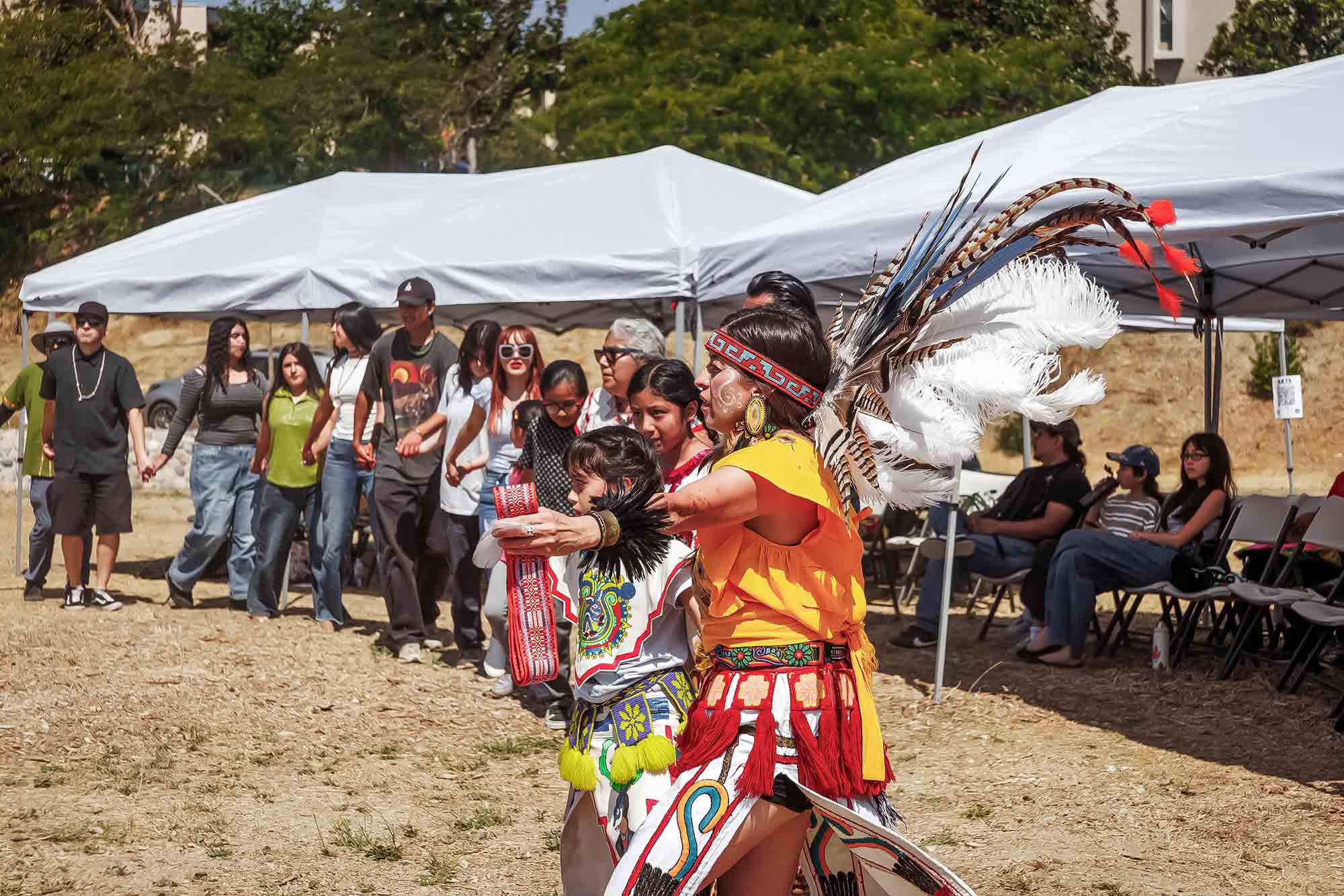
These events are not a supplement to that work. They are central to it. When a family attends a traditional dance performance at a local park, they are not just watching a show. They are forming a memory, beginning a relationship with a place that may last a lifetime. Ninety-eight percent of participants said they would recommend similar events to others. Park staff rated their readiness to host future events at 9.2 out of 10 — a signal not just of satisfaction, but of institutional momentum that belongs to all of us.
California’s parks were set aside with a promise: that these places belong to everyone. Not to those who have always known how to find them, but to everyone who comes to them. Arts in California Parks is keeping that promise. And all of us who care about what California’s public lands are for have a responsibility to protect and sustain what is being built here — not just the land itself, but the connections that makes the land worth protecting.
Learn more: ParksCalifornia.org/Arts